
Best Short Stories for Fashion Enthusiasts: Analyzing Sartorial Narrative and Style 2025
People often assume that short stories are merely the ready-to-wear version of the literary world—quick, disposable, and lacking the bespoke complexity of a thousand-page novel. This is a fundamental misunderstanding of the medium’s architecture. A short story does not lack depth; rather, it achieves its impact through a high-density compression of meaning, much like a perfectly tailored blazer where every stitch must justify its existence. In the realm of fashion-conscious literature, the short story serves as a magnifying glass, focusing on a single garment, an accessory, or a stylistic choice to reveal the entire soul of a character or the decay of a social class.
The intersection of fashion and short fiction is not about descriptions of pretty dresses. It is about the semiotics of apparel. When an author spends three sentences describing the weight of a silk shawl or the scuff on a leather boot, they are not filling space. They are establishing an aesthetic economy. For those who appreciate the nuances of design and the social weight of appearance, these stories offer a more profound look at the industry of self-presentation than any runway report could hope to achieve.
What are the best short stories for analyzing fashion as a social weapon?
The history of short fiction is littered with characters who use clothing to climb social ladders or, more often, to hide the fact that they are falling off them. Fashion, in these narratives, is rarely about comfort; it is a tool of combat. To understand the power of the sartorial in fiction, one must look at the masters of 19th and early 20th-century realism, where the cost of a yard of lace could mean the difference between respectability and ruin.
Guy de Maupassant: “The Necklace” (1884)
Perhaps no story illustrates the devastating weight of a single accessory better than Maupassant’s masterpiece. Mathilde Loisel, a woman born into a family of clerks, feels she is destined for a life of luxury that her husband cannot provide. When invited to a high-society ball, she believes her beauty is insufficient without the proper armor. She spends 400 francs—money her husband had saved for a gun—on a dress, but even then, she feels “humiliated to look poor among other women who are rich.”
- Model: “The Necklace” in The Necklace and Other Short Stories (Approx. $12.00)
- Pro: A brutal, perfectly paced analysis of class envy and the vanity of appearances.
- Con: The ending is notoriously cynical, which may frustrate readers looking for a redemptive arc.
The central item, a borrowed diamond necklace, becomes a symbol of the deceptive nature of the fashion world. The irony, of course, is that the necklace was a fake—a piece of costume jewelry worth at most 500 francs—yet Mathilde and her husband spend ten years in crushing poverty to replace it with a genuine version costing 36,000 francs. Maupassant forces us to confront the reality that the perception of luxury is often more powerful, and more dangerous, than luxury itself.
Edith Wharton: “Bunner Sisters” (1916)
Wharton, a writer deeply attuned to the nuances of New York’s social strata, explores the darker side of the garment industry in this novella-length short story. Ann Eliza and Evelina Bunner run a small, struggling millinery and “notions” shop. Their lives revolve around the delicate repair of silk and the sale of ribbons. When a clock is introduced into their lives—a luxury item they cannot truly afford—it sets off a chain of events that leads to the slow disintegration of their modest world.
Wharton uses the sisters’ relationship with fabric to mirror their emotional states. The “pale blue silk” that Evelina wears to her wedding becomes a ghost of her former aspirations as her marriage fails and her health declines. Wharton’s attention to the technical aspects of 19th-century dressmaking provides a gritty, realistic counterpoint to the glamour usually associated with her work. It is a story about the labor behind the fashion, the tired eyes and pricked fingers that sustain the aesthetic standards of the elite.
| Story Title | Key Fashion Element | Social Theme | Historical Context |
|---|---|---|---|
| “The Necklace” | Diamond (Paste) Necklace | Class Deception | 1880s Paris Bourgeoisie |
| “Bunner Sisters” | Blue Silk Wedding Dress | Economic Fragility | Pre-War New York Retail |
| “The Swimmer” | Lycra Swim Trunks | Suburban Decay | 1960s American Affluence |
Which contemporary short stories use clothing to explore cultural identity?

In modern short fiction, the focus has shifted from the cost of clothing to its role in the construction of identity, particularly in the context of migration and the clash of cultures. Fashion becomes a language through which characters negotiate their place in a new world, often clinging to traditional garments as a form of resistance or adopting new styles as a means of assimilation. This transition is not merely about aesthetics; it is a profound psychological struggle played out on the surface of the body.
Chimamanda Ngozi Adichie: “The Thing Around Your Neck” (2009)
In the title story of her acclaimed collection, Adichie explores the experience of a young Nigerian woman in America. Fashion here is a marker of “otherness.” The protagonist notes the way Americans dress—the casualness that borders on disrespect for the effort of presentation. She observes the “expensive-looking” clothes of her American boyfriend and the way her own Nigerian identity is fetishized through his interest in her culture.
- Model: The Thing Around Your Neck (Approx. $16.00)
- Pro: Sharp, observant prose that captures the physical sensation of cultural displacement.
- Con: Some stories in the collection feel slightly repetitive in their thematic focus on the immigrant experience.
The “thing” around her neck is a metaphorical constriction, but it is often manifested through the physical discomfort of trying to fit into a society that views her as an accessory. Adichie uses the tactile details of life—the smell of hair relaxers, the texture of cheap polyester uniforms in a restaurant—to ground her characters’ emotional journeys in a sensory reality that readers can feel.
Jhumpa Lahiri: “A Temporary Matter” (1999)
Lahiri is a master of the subtle sartorial cue. In this story, from her Pulitzer Prize-winning collection Interpreter of Maladies, a couple mourning the loss of their stillborn child navigates their grief during a series of nightly power outages. The clothing they wear—or stop wearing—signals their withdrawal from the world. Shoba, once a woman who took pride in her appearance, now wears “oversized sweaters and sweatpants,” her grooming habits abandoned as she retreats into a shell of sorrow.
The contrast between their former, well-dressed selves and their current, disheveled state serves as a visual shorthand for the collapse of their marriage. Lahiri doesn’t need to tell us they are falling apart; she shows us through the neglected laundry and the lack of care for their physical presentation. For Lahiri, fashion is the first thing to go when the internal world becomes too heavy to bear. It is a poignant reminder that the effort we put into our appearance is often an act of hope—a belief that the world is worth dressing up for.
Clothing in literature functions as a second skin; it is the boundary where the private self meets the public world. When that boundary is breached or neglected, the narrative tension inevitably rises.
How does the ‘aesthetic of brevity’ in short fiction mirror minimalist fashion trends?
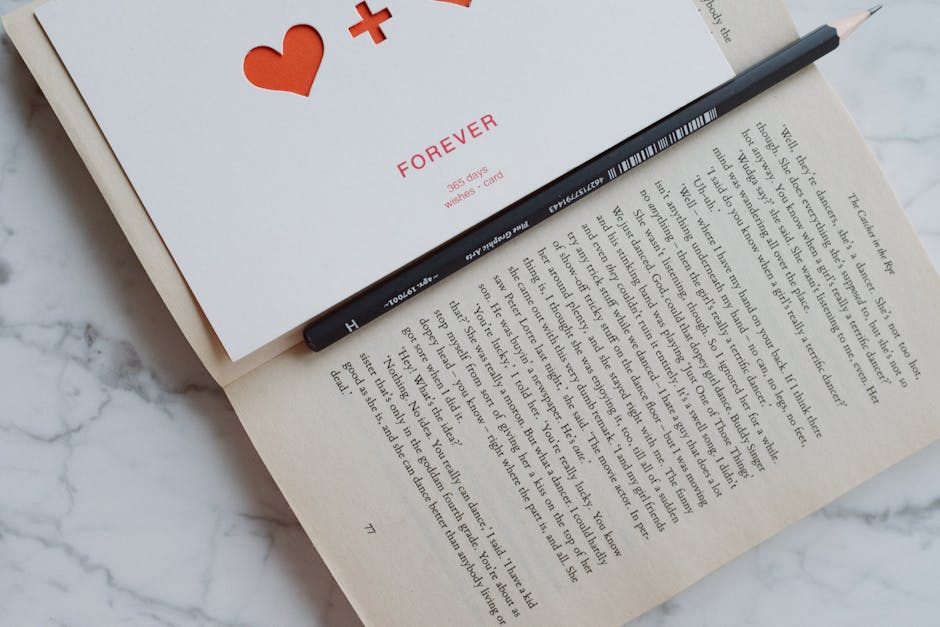

There is a structural parallel between the minimalist movement in fashion—pioneered by the likes of Jil Sander and Phoebe Philo—and the “dirty realism” or minimalist short story movement of the late 20th century. Both prioritize the removal of the superfluous. Just as a minimalist coat relies on the quality of the wool and the precision of the cut rather than decorative flourishes, a minimalist short story relies on the strength of its verbs and the resonance of its subtext.
Raymond Carver: “What We Talk About When We Talk About Love” (1981)
Carver is the literary equivalent of a raw-hemmed denim jacket. His prose is stripped of adjectival padding, leaving only the essential structure of the narrative. In his stories, characters are often defined by a single piece of clothing or a specific physical habit. In “What We Talk About When We Talk About Love,” the setting is a kitchen table, and the focus is on the movement of hands and the pouring of gin. The lack of descriptive “fashion” is a stylistic choice in itself—a rejection of the ornate in favor of the authentic.
- Model: What We Talk About When We Talk About Love (Approx. $15.00)
- Pro: Revolutionized the American short story with its lean, muscular prose.
- Con: The heavy editing by Gordon Lish (which created this style) can sometimes feel emotionally distant.
This “unadorned” style mirrors the way minimalist fashion seeks to reveal the wearer’s true form by removing distractions. When a writer like Carver or Lydia Davis avoids describing a character’s outfit, they are forcing the reader to look at the character’s actions. It is a form of literary honesty that parallels the fashion industry’s recurring obsession with “the basics.” The best short stories in this vein prove that you don’t need a heavy coat of prose to convey warmth or weight.
Lydia Davis: “The Collected Stories” (2009)
Lydia Davis takes minimalism to its logical extreme. Some of her stories are only a few sentences long. In “A Few Things Wrong with Me,” she lists minor personal failings with the clinical detachment of a quality control inspector. Her work is the literary version of a capsule wardrobe—every word is a versatile staple that can be combined in the reader’s mind to create a multitude of meanings. The trade-off here is obvious: you lose the lush, immersive descriptions of a Woolf or a Proust, but you gain a crystalline clarity that is rare in contemporary writing.
The challenge for the reader is to find the beauty in the negative space. In fashion, this is the appreciation of a silhouette without the distraction of a print. In Davis’s work, it is the appreciation of a thought without the distraction of a plot. It is a demanding style, but for those who value precision above all else, it represents the pinnacle of the short story form. It is the “quiet luxury” of literature—expensive in its restraint and powerful in its silence.
The Sartorial Evolution of the Short Story Form
As we look toward the future of short fiction, the influence of visual culture and the rapid-fire nature of social media are beginning to shape the narrative “look” of the medium. We are seeing a return to the maximalist—stories that are densely packed with brand names, pop culture references, and a hyper-awareness of digital aesthetics. This mirrors the “more is more” trend in street fashion, where logos and contrasting textures create a vibrant, if chaotic, identity.
However, the core of the short story remains unchanged. Whether it is a 19th-century tale of a silk dress or a 21st-century flash fiction piece about a pair of limited-edition sneakers, the goal is the same: to use a specific, tangible object to explore an intangible human truth. The best short stories are those that recognize that we are what we wear, but also that we are the people who suffer, love, and dream beneath the fabric. Fashion provides the vocabulary, but the story provides the soul.
For the modern reader, engaging with these stories is an exercise in stylistic literacy. It requires an eye for detail and an understanding of how small choices—a button left undone, a choice of polyester over wool, a borrowed necklace—can ripple outward to define a life. In the end, the best short stories are like the best garments: they fit perfectly, they stand the test of time, and they change the way you see yourself in the mirror.